
Preparation
This is just the basic preparation steps for jerky meat. This applies to all recipes.
Choose the meat
Get a good piece of inside round French roast beef (examples at IGA, Metro). Check the weekly flyers, anything above 4$/lb is a ripoff ! (Price point last verified in December 2022)
Prep the meat
Two ways to make meat easier to cut (assuming we're starting with a French roast cut) :
If the meat is frozen, get it out of the freezer and let it thaw for about 24 hours. The meat will still feel very firm to the touch, but it will actually be the perfect hardness to cut.
- OR -
If the meat is fresh, put it in the freezer for 1-2 hours.
Cut the meat
Make slices, about 1/16 inches or 2 mm thick, as consistent as possible. Cut against the grain. Basically, you want the thinnest slices you can make, without having the meat start to fall apart. Don't worry if you cut a bit too think, it'll lose water and shrink. As long as it's not a lump you'll be fine.
Marinade the meat
Dip each piece of meat in the marinade and then put them in a "marinating vessel" (a sous-vide bag works wonders, but a big bowl covered in plastic wrap is totally fine).
When all the meat has been put aside, pour the rest of the marinade into the marinating vessel. Massage gently to get the sauce into the nooks & crannies. Rinse the jar with a slash of water to get as much of the sauce as possible (diluting isn't a bad thing, it may be too salty otherwise).
Honestly, I used to let it marinate ovwenight and up to 48 hours, but I learned that 30 minutes is enough ; you just want the meat to absorb a bit. If you let it marinate though, the best is to turn the meat around every couple hours just to make sure to coat everything evenly.
Dry the meat
Preheat the over at 170°F on convect bake.
Put the meat on a cooking rack (the tighter the mesh the better, helps prevent the meat from sticking). Pieces shouldn't get over each other, but they can touch lightly, they'll shrink as they dry.
Put the meat into the heated oven.
Let dry for about two hours. Take the meat out and flip the pieces over.
After that, is on a piece-by-piece basis. Depending on the thickness, some of them will be done in an hour, some of them will take two or even three. Don't hesitate to check the over regularly and take out any pieces that feel done.
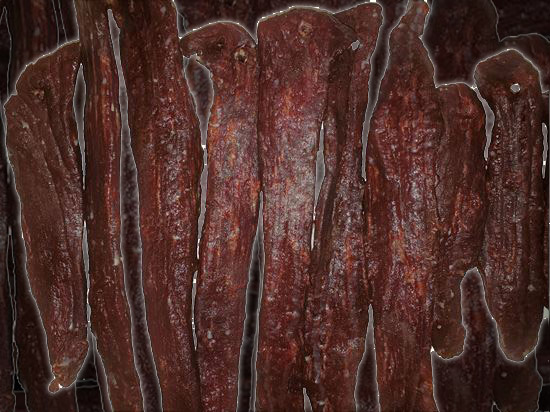
What you're looking for is a piece that will crack when you bend it, but not break, and should have a bit of a "hairy" texture with visible tiny threads desperately trying to keep the meat together. It shouldn't "glisten" with humidity on the inside, but it's okay if there's a bit of an "oily" texture on the surface, depending on the fat content of the meat.
Store the meat
Put the jerky in a closed jar or container with a silica sachet to absorb moisture.
From experience, jerky stores well on the counter for a week or two but then can develop mold. Storing in the fridge extends that time (we don't know by how much, we always eat it before it goes bad).